
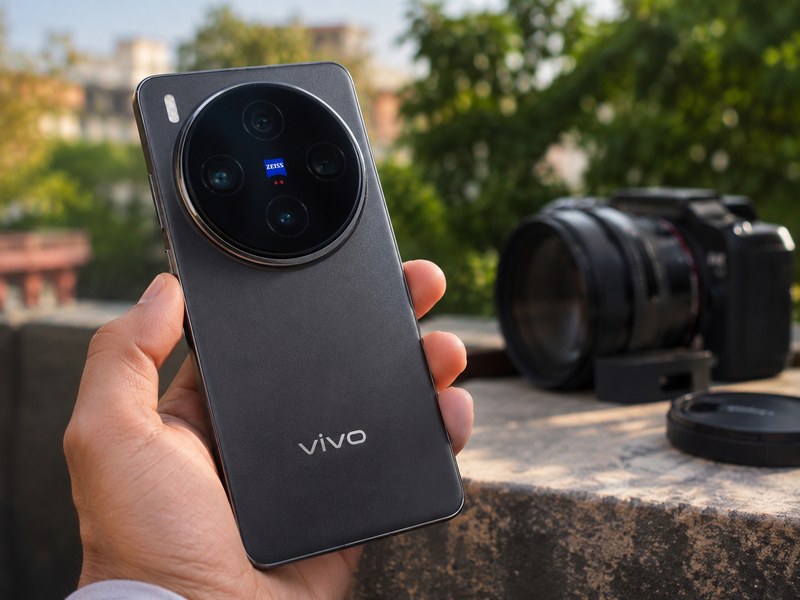
Smartphone cameras are becoming increasingly powerful, but the Vivo X500 Pro Max takes mobile photography and videography to another level. With a 50MP main camera, a 200MP ZEISS telephoto camera, a 50MP ultrawide lens and advanced video recording features, Vivo is targeting users who want more than an ordinary smartphone camera.
The biggest attraction is its ability to record 4K video at up to 240fps, alongside professional video tools such as Log recording, Dolby Vision, custom colour profiles and multi-camera recording. These features make the X500 Pro Max particularly interesting for photographers, filmmakers, vloggers and content creators.
But impressive specifications do not always translate into a perfect camera experience. How well does the phone perform in real-world photography? Is its 4K 240fps recording genuinely useful? And are there any compromises worth considering?
Based on published camera tests, video samples and hands-on reviews from Notebookcheck, GSMArena, Android Authority and other technology publications, here is our detailed Vivo X500 Pro Max camera and video review.
Vivo X500 Pro Max Camera Specifications
The Vivo X500 Pro Max features a versatile triple-camera system developed with ZEISS. Rather than simply increasing megapixel counts, Vivo has focused on sensor improvements, image processing and video capabilities.
Here is a look at its rear camera configuration:
| Camera | Specifications |
|---|---|
| Main camera | 50MP Sony LYTIA L910, 24mm, OIS |
| Telephoto camera | 200MP Samsung ISOCELL HP0, 85mm, OIS |
| Ultrawide camera | 50MP Samsung ISOCELL JN5, 15mm, autofocus |
| Front camera | 50MP |
| Optical zoom | 3.5x |
| Video recording | Up to 8K at 30fps |
| Slow-motion video | Up to 4K at 240fps |
| Professional video | Log recording, Dolby Vision and 10-bit options |
The 200MP telephoto camera is one of the biggest attractions. It offers 3.5x optical zoom and also supports optional teleconverter accessories for longer-distance photography.
The main camera uses a large 1/1.28-inch sensor, while the telephoto camera features a 1/1.4-inch sensor. Together, these cameras give the phone considerable flexibility across different shooting situations.
Vivo X500 Pro Max Camera Review: How Good Are the Photos?
The camera system is clearly the phone’s biggest selling point. Published reviews generally praise its image quality, consistency and versatility.
1. Main Camera: Detailed Photos and Improved Dynamic Range
The 50MP main camera uses Sony’s LYTIA L910 sensor with optical image stabilisation.
In real-world testing, the main camera delivers detailed photographs with good exposure and colour reproduction. The large sensor helps capture more light, particularly when shooting indoors or in challenging lighting conditions.
One of the improvements highlighted in published comparisons is its handling of highlights and shadows. The camera can retain more detail in difficult lighting situations, helping prevent bright areas from losing all their texture.
The ZEISS colour profiles also allow users to choose different photographic styles. Natural mode aims for more restrained colours, while Vivid mode produces more vibrant results.
However, image processing is not perfect. Some reviewers have noticed over-sharpening and lifted shadows in certain scenes. Users who prefer completely natural-looking photographs may need to experiment with the available colour profiles.
Verdict: The main camera is a strong everyday photography option, particularly for landscapes, portraits and travel photography.
2. 200MP Telephoto Camera: The Star of the Camera System
The 200MP telephoto camera is arguably the most exciting part of the Vivo X500 Pro Max.
With an 85mm focal length and 3.5x optical zoom, it provides additional reach without requiring users to move closer to their subjects.
It is particularly useful for:
- Portrait photography
- Wildlife and nature photography
- Architecture and travel photography
- Distant subjects
- Detailed close-up shots
According to Android Authority’s camera testing, the telephoto camera delivers impressive results at both 3.5x and 7x zoom. Its performance in portrait photography is another highlight.
Vivo also offers optional teleconverter accessories, including 200mm and 400mm options. These expand the phone’s photographic capabilities for users who want to capture distant subjects.
The accessories are not essential for everyday photography, but they make the X500 Pro Max more interesting for serious mobile photographers.
Verdict: The 200MP telephoto camera is a major strength, especially for portraits, zoom photography and travel content.
3. Ultrawide Camera: Useful but Not the Main Attraction
The 50MP ultrawide camera uses Samsung’s ISOCELL JN5 sensor and includes autofocus.
It is designed for landscape photography, architecture, group photographs and situations where capturing a wider field of view is important.
The addition of autofocus improves its versatility, particularly when users want to photograph subjects at different distances.
However, the ultrawide camera is not as feature-rich as the main and telephoto cameras when it comes to video recording. Its maximum video resolution is limited to 4K at 60fps, rather than matching the higher frame rates available on the main camera.
For most everyday photography, this is unlikely to be a major problem. But creators who frequently switch between lenses while recording video may find the limitation disappointing.
Vivo X500 Pro Max Video Review: Is 4K 240fps a Game Changer?
Video recording is where the X500 Pro Max makes a particularly strong impression.
The phone supports 4K recording at up to 240fps, allowing users to capture high-resolution slow-motion footage. This is a significant feature for mobile videographers who want to create cinematic sequences without carrying a dedicated camera.
According to Android Authority’s hands-on testing, the 4K 240fps mode produces impressive slow-motion footage when recording suitable subjects in good lighting.
It is particularly useful for capturing:
- Sports and fast-moving subjects
- Water splashes and flowing water
- Birds and wildlife
- Moving vehicles
- Action sequences
- Creative social media videos
However, the mode has limitations. It is restricted to the main camera, with 24mm and approximately 2x framing options. The telephoto and ultrawide cameras cannot record in this mode.
The reviewer also observed that image quality can decline in less-than-ideal lighting. Footage may look overly contrasted, partly because HDR is unavailable in this recording mode.
There is another practical issue: the phone warns users that some background applications may be closed when they activate 4K 240fps recording. This suggests that the mode places considerable demands on the hardware.
Verdict: 4K 240fps is an impressive feature for creative video recording, but it works best in well-lit environments and is not equally versatile across all cameras.
Log Video and Dolby Vision: Better Control for Content Creators
The X500 Pro Max is not limited to automatic video recording. It also provides several advanced tools for users who want more control over the final footage.
Log Video Recording
Log recording captures footage with a flatter appearance, preserving more flexibility for colour grading during editing.
This is useful for creators who work with applications such as DaVinci Resolve or other professional video-editing software.
The phone also supports 4K 120fps 10-bit Log recording, giving videographers additional flexibility when capturing action or creating cinematic footage.
Dolby Vision HDR
Dolby Vision support helps produce videos with a wider dynamic range and more detailed highlights when recording in supported modes.
It is useful for users who want to capture vibrant footage with better contrast and brightness information.
TrueDynamic and High Dynamic Range
Vivo’s LOFIC-capable main camera is designed to improve dynamic-range performance. The technology helps the sensor retain more information in challenging lighting conditions.
In practical terms, this can help when recording scenes with bright skies, dark foregrounds or strong differences between light and shadow.
However, the benefits depend on the recording mode and camera settings being used.
Dual View Video Recording: A Useful Feature for Vloggers
Another interesting addition is the Dual View recording feature.
It allows users to record using two cameras simultaneously instead of being restricted to the usual front-and-rear camera combination.
For example, a creator could record a subject using the telephoto camera while capturing a wider view using the ultrawide lens.
The feature offers picture-in-picture and split-screen layouts, making it useful for interviews, travel videos and reaction-style content.
Android Authority found the feature easier to access than on some previous Vivo models. However, Dual View recording is limited to 4K at 30fps and has some restrictions on video styles and HDR options.
It is a useful creative tool, although it is not a replacement for professional multi-camera production.
Video Stabilisation and Slow-Motion Performance
Stabilisation is important when recording handheld videos, particularly while travelling or moving around.
The X500 Pro Max offers optical image stabilisation on its main and telephoto cameras, along with dedicated video stabilisation features.
The phone also includes an Ultra-stable video mode that records at up to 2.8K and 60fps.
These features make it more practical for handheld recording, although users shooting professional footage may still benefit from a gimbal.
The 4K 240fps mode also deserves a qualification. Notebookcheck’s travel testing found that the video preview could become noticeably stuttery, even after closing background applications. Its reviewer also noted that some slow-motion camera movements appeared less smooth than expected.
This is an important distinction: the phone can capture impressive slow-motion footage, but the recording experience is not completely free of performance limitations.
Vivo X500 Pro Max Camera: What Do Professional Reviews Say?
The camera and video experience has received positive attention from several technology publications.
Notebookcheck: Strong Photography, Some Usability Issues
Notebookcheck’s extended Brazil travel report involved approximately 5,000 photographs and several videos captured over almost a month.
The reviewer praised the overall camera quality and consistency, highlighting the phone’s ability to produce impressive travel photographs.
However, the review also pointed out issues with the camera interface and shortcut-button usability. The 4K 240fps preview was another area where performance could be improved.
The second part of the travel report also highlighted the limited video capabilities of the ultrawide camera and some overexposed photographs in particularly bright environments.
GSMArena: A Versatile Camera Setup
GSMArena’s review highlights the combination of a 50MP main camera, 200MP telephoto camera and 50MP ultrawide camera.
The phone also offers extensive video recording options, including 8K recording, 4K 240fps, Log video and Dolby Vision.
The camera hardware is clearly designed for users who want more than standard point-and-shoot photography.
Android Authority: A Strong Video-Creator Experience
Android Authority’s testing particularly praised the 4K 240fps recording feature and the flexibility of Dual View video.
The reviewer described the slow-motion mode as especially enjoyable to use, while also identifying limitations in low light, auto-framing and some creative video features.
Overall, the phone offers an extensive video toolkit, although not every feature is equally polished.
Vivo X500 Pro Max Camera: Pros and Cons
What We Like
- Excellent 50MP main camera with a large sensor.
- 200MP telephoto camera with 3.5x optical zoom.
- Strong portrait and zoom photography.
- Versatile ZEISS colour profiles.
- 4K 240fps slow-motion video recording.
- 4K 120fps Log video support.
- Dolby Vision video recording.
- Flexible Dual View video recording.
- Optional 200mm and 400mm teleconverter accessories.
What Could Be Better
- 4K 240fps recording is limited to the main camera.
- Slow-motion performance can be weaker in low light.
- The ultrawide camera is limited to 4K 60fps video.
- Camera preview can stutter during demanding recording modes.
- Some automatic video features need refinement.
- The camera interface and shortcut controls could be easier to use.
- The premium price makes it a significant investment.
Is Vivo X500 Pro Max Worth Buying for Photography and Videography?
The Vivo X500 Pro Max is an excellent option to consider if camera performance is your main smartphone priority.
Its main camera delivers detailed photographs, while the 200MP telephoto camera provides impressive zoom and portrait capabilities. The ultrawide camera adds flexibility for landscapes and group photography.
However, its video capabilities are what make it especially interesting for content creators.
Features such as 4K 240fps slow motion, 4K 120fps Log recording, Dolby Vision and Dual View give users considerable creative freedom. These tools can be useful for travel creators, vloggers, filmmakers and social media professionals.
The phone is not without compromises. Some video features are restricted to specific cameras, and demanding recording modes can affect the preview experience. Its camera software also has room for improvement.
Final recommendation: The Vivo X500 Pro Max is worth considering if you want a premium smartphone that combines excellent photography with advanced video recording. It is particularly attractive for creators who regularly shoot slow-motion videos, portraits, travel footage and social media content.
If you primarily take everyday photographs and do not need professional video tools, a less expensive flagship may offer better value.