
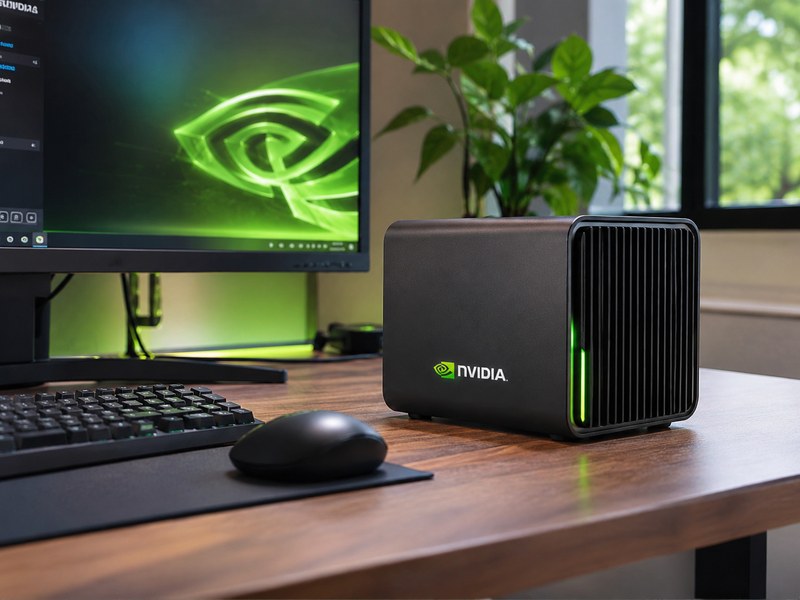
NVIDIA’s RTX Spark platform started in laptops. It has now moved into small desktops. Compact desktops from ASUS, Dell and MSI are on sale, with Acer, GIGABYTE, HP and the Microsoft Surface RTX Spark Dev Box coming soon. If you’ve wondered whether a dedicated local AI machine makes sense for you, here’s what you’re getting and who should buy one.
What is an RTX Spark compact desktop?
It’s a small Windows PC built to run AI models and agents on your own hardware instead of in the cloud. NVIDIA says these machines handle local AI agents, image and video generation, and model fine-tuning on a dedicated Windows PC. The idea is an always-on machine that runs personal AI agents 24/7.
Key specs
- Chip: A Grace CPU paired with a Blackwell GPU. The processor is Arm-based and was co-developed with MediaTek.
- Memory: Up to 128GB of unified memory, which lets the system run local models of up to 120 billion parameters.
- AI performance: The desktop version of the chip runs at 140 watts and delivers up to 1 petaflop of local AI performance.
- Networking: Ten-gigabit Ethernet speeds up transfers of large datasets, model files and creative assets from networked storage.
The petaflop and 120B-parameter numbers are NVIDIA’s own claims. Wait for independent benchmarks before treating them as real-world results.
Why unified memory matters
Large AI models need lots of fast memory. On a typical gaming PC, you’re limited by the VRAM on the graphics card. A unified memory pool lets the CPU and GPU share one large bucket, which is what makes big local models practical on a box this small. That’s the main reason to buy this kind of hardware instead of a standard mini PC.
Software support
A new platform is only useful if the apps work. NVIDIA is addressing this on several fronts:
- Agents: NVIDIA Switchyard is now available in Hermes and routes agent tasks between local and cloud models. Everyday work stays on the device, while demanding reasoning goes to the cloud, which helps control cloud costs.
- Adobe: Illustrator and InDesign now have native Windows on Arm versions optimized for RTX Spark, and Substance 3D Painter 12.2 offers native Arm support in public beta. Premiere Pro supports TensorRT-RTX acceleration for features like Enhance Speech, Object Mask and Auto Reframe.
- 3D: Blender 5.3 integrates DLSS 4.5 Ray Reconstruction into the Cycles viewport.
- Developers: You can set up agents with Hermes Agent or NVIDIA NemoClaw blueprints and fine-tune supported models with Unsloth.
How much does it cost?
These are not cheap mini PCs. One report puts the starting price at $4,399, while another says $4,499. CGMagazine reports MSI’s models starting around $3,000. Final prices depend on the model, configuration and region, so check the manufacturer’s page. Nvidia’s RTX Spark mini PCs go on sale for local AI, from $4,399
Who should buy one?
A good fit if you:
- Run AI agents or local models all day and want to stop paying per token
- Fine-tune models and need lots of memory in a quiet, compact box
- Work in Adobe, Blender or ComfyUI and want AI features running locally
- Have privacy requirements that keep data on your own hardware
Probably skip it if you:
- Mainly want a gaming PC, since a standard GPU desktop is better value
- Depend on x86-only Windows software, because this is an Arm machine and compatibility needs checking
- Only use AI occasionally, where cloud subscriptions cost far less
The bottom line
RTX Spark compact desktops are a serious option for developers and creators who want a dedicated local AI box. The memory capacity and software ecosystem are strong selling points. The price, the Arm compatibility question and the unverified performance claims mean most people should wait for reviews first.
Frequently Asked Questions
They are small Windows PCs designed to run AI workloads on your own hardware. NVIDIA says they handle local AI agents, image and video generation, and model fine-tuning on a dedicated machine.
ASUS, Dell and MSI are selling them now. Acer, GIGABYTE and HP are coming soon, along with the Microsoft Surface RTX Spark Dev Box.
Reported prices vary. One outlet says they start at $4,399, another says $4,499, and a third reports MSI models from about $3,000. Check the manufacturer's page for current pricing in your region.
They offer up to 128GB of unified memory, which NVIDIA says supports local models of up to 120 billion parameters.
They pair a Grace CPU with a Blackwell GPU. The processor is Arm-based and was co-developed with MediaTek.