
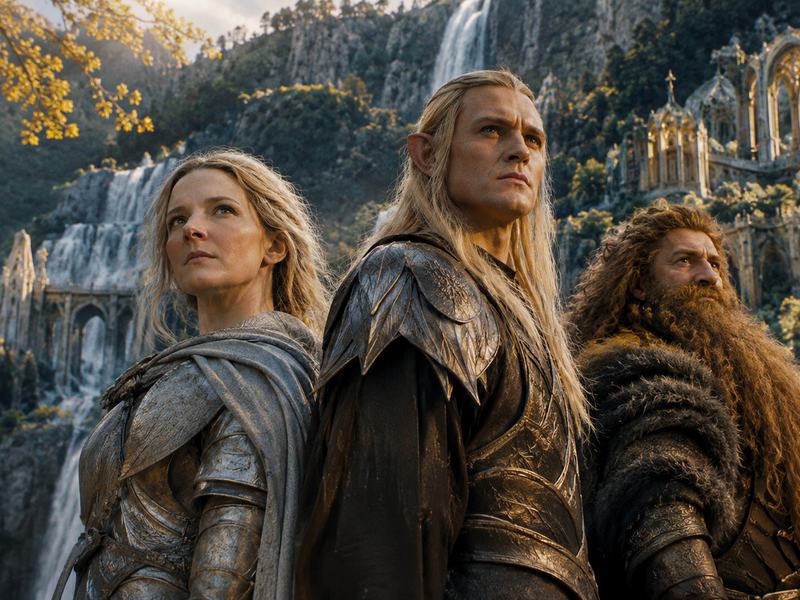
Middle-earth is once again heading towards war. The Lord of the Rings: The Rings of Power has returned with its third season on Amazon Prime Video, bringing back Sauron, Galadriel, Elrond, Gandalf and several other familiar characters. This time, the story moves forward with a five-year time jump, a more dangerous Middle-earth and a growing conflict between Sauron’s forces and the Elves.
After two seasons of establishing the history of the Second Age, Season 3 has an important task: turn the series’ enormous mythology into a more focused and engaging fantasy drama. The early episodes suggest that the creators are making progress, with more action, new characters and a clearer direction for the central conflict.
But is the new season finally living up to the expectations of Tolkien fans? Here is our review of the first four episodes.
The Rings of Power Season 3: Release Date and Where to Watch
The Lord of the Rings: The Rings of Power Season 3 premiered on November 11, 2026, exclusively on Amazon Prime Video.
Unlike a traditional weekly release, Prime Video is releasing the eight-episode season in three batches:
- Episodes 1–4: November 11, 2026
- Episodes 5–6: November 18, 2026
- Episodes 7–8: November 25, 2026
The series is set during the Second Age of Middle-earth, thousands of years before the events of The Hobbit and The Lord of the Rings.
The third season begins five years after the fall of Eregion, with Sauron expanding his influence and preparing to forge the One Ring.
Rings of Power Season 3 Story: What Has Changed?
Season 3 opens in a Middle-earth that has changed significantly since the previous season. Sauron’s growing power has pushed the Elves and other kingdoms into a dangerous position.
The Dark Lord is focused on completing his plan to create the One Ring, a weapon that could give him control over the other Rings of Power. Meanwhile, the Elves, Dwarves and Men face difficult decisions as the threat of war becomes increasingly difficult to ignore.
Galadriel continues to play an important role in the fight against Sauron, while Elrond and Gil-galad work to protect the remaining Elven kingdoms. Gandalf is also involved in events taking place in Rhûn, adding another dimension to the expanding conflict.
The season’s five-year time jump helps establish a new phase of the story. Characters have changed, political tensions have intensified and the consequences of Sauron’s actions are becoming more visible.
Rather than spending too much time setting up the world again, the opening episodes move more directly into the conflict.
Sauron Remains the Biggest Attraction
Charlie Vickers returns as Sauron, and his performance continues to be one of the strongest elements of the series.
The character is no longer simply a mysterious threat operating behind the scenes. His ambitions are becoming clearer, and the story gives more attention to his plans and growing influence.
What makes Sauron interesting is the contrast between his calculated approach and the chaos he creates around him. He understands how to manipulate people, exploit their weaknesses and use ambition against those who oppose him.
Season 3 places the character closer to the centre of the narrative. His mission to forge the One Ring gives the story a more recognisable direction and connects the series more directly with the mythology familiar to The Lord of the Rings audience.
Galadriel, Gandalf and the Returning Characters
Morfydd Clark returns as Galadriel, who continues to face the consequences of her decisions and the growing danger posed by Sauron.
Daniel Weyman also returns as Gandalf. With his identity now established, the character has a more defined place in the larger story. His journey in Rhûn adds another storyline to the season, although viewers may find the number of locations and characters difficult to follow.
Robert Aramayo’s Elrond remains an important part of the Elven storyline, while the Dwarven kingdom of Khazad-dûm continues to deal with its own political and personal conflicts.
The series benefits from the returning cast, but its large ensemble remains a challenge. With several storylines happening across Middle-earth, not every character receives equal attention.
New Characters Make Season 3 More Interesting
One of the most noticeable additions is Jamie Campbell Bower as Celeborn, Galadriel’s long-missing husband. His introduction brings a personal and romantic dimension to Galadriel’s storyline.
Another interesting addition is Marnûkh, played by Adam Young. The character offers a different perspective on the Orcs and becomes involved in an important journey with Galadriel and Arondir.
Eddie Marsan also joins the cast as Thrain, adding another layer to the political tensions surrounding the Dwarves.
These new characters help refresh a series that has spent considerable time developing its existing cast. Marnûkh, in particular, has received positive attention from early reviewers for bringing personality and unexpected depth to the story.
Visual Effects, Cinematography and Action
Visually, The Rings of Power continues to be one of Prime Video’s most ambitious productions.
The landscapes, costumes, architecture and large-scale environments remain impressive. From the Elven kingdoms to the underground world of the Dwarves, the production design helps create a convincing sense of scale.
Season 3 also appears more interested in delivering action than the earlier instalments. The conflict between Sauron’s forces and the remaining kingdoms creates opportunities for larger battles and more intense confrontations.
The action sequences are among the elements highlighted in early reviews. The series has not abandoned its slower, atmospheric approach, but the opening episodes feel more directly connected to the coming war.
Does Season 3 Fix the Pacing Problems?
Pacing was one of the most frequently discussed issues in the first two seasons. The series often moved between several locations and characters without giving every storyline enough momentum.
Season 3 makes an effort to improve this.
The five-year time jump gives the narrative a fresh starting point, while the growing threat of Sauron provides a central conflict around which the different storylines can develop.
However, the problem has not disappeared completely. The series still follows characters spread across different parts of Middle-earth. Some political and secondary storylines may feel less engaging than the main conflict involving Sauron and the Elves.
The Guardian’s review describes the season as more action-packed and less demanding to follow, but also questions whether the changes are enough to make the show compelling for viewers who were not already invested in Tolkien’s world.
What Are Critics Saying About The Rings of Power Season 3?
The early critical response is generally positive, although not every reviewer agrees that the series has solved its storytelling problems.
Rotten Tomatoes lists an 84% Tomatometer score from 58 critic reviews and a 68% audience score based on more than 250 ratings at the time of checking. Its critics’ consensus highlights the season’s more focused storytelling and stronger use of its central characters.
Some reviewers have praised the improved action, visual presentation and new characters. Others believe the show still struggles with its large cast, complicated mythology and multiple storylines.
The Guardian awarded the season 3 out of 5 stars, noting that the show has become more action-packed but may still struggle to attract viewers who are not already fans of Tolkien’s world.
These scores reflect the reception available at the time of writing and may change as more reviews and audience ratings are added.
What Works and What Doesn’t in Season 3?
What Works
- Charlie Vickers delivers another compelling performance as Sauron.
- The five-year time jump gives the story a fresh direction.
- Improved focus on the growing conflict in Middle-earth.
- Impressive production design, cinematography and visual effects.
- New characters such as Celeborn and Marnûkh add interest.
- More action and a stronger sense of an approaching war.
What Doesn’t Work
- The large ensemble can make some storylines difficult to follow.
- Certain political and secondary plots still affect the pacing.
- Viewers unfamiliar with Tolkien’s mythology may find the story complicated.
- Not every character receives enough development in the opening episodes.
Final Verdict: Is The Rings of Power Season 3 Worth Watching?
The Lord of the Rings: The Rings of Power Season 3 is a promising return to Middle-earth. Its opening episodes show a series that is becoming more confident about its central conflict, giving Sauron a stronger presence and bringing the different kingdoms closer to a larger war.
The visuals remain impressive, the performances are engaging and the new characters bring some welcome energy. However, the show still has to manage a complicated mythology and a large number of parallel storylines.
Our verdict: Worth watching for Tolkien fans and fantasy lovers, especially those who enjoyed the first two seasons. Viewers who struggled with the earlier seasons’ slow pacing may notice improvements, but the series has not completely left those problems behind.
With four episodes available so far, the remaining instalments will determine whether Season 3 can maintain its momentum and deliver a satisfying conclusion.
For now, Middle-earth is worth revisiting.